- Native oyster season opens 1 September
- Around a third of Loch Ryan's 23 million native oysters found brooding larvae at the same time, a proportion never before recorded in the loch
- Spawning arrived three to four weeks early, likely driven by this year's marine heatwave
- Spat collectors placed around the loch in a joint project with the Solway Coast and Marine Project (SCAMP)
- Stranraer Oyster Festival, 11–13 September, celebrates Scotland's last wild native oyster fishery on the shores of the loch
An unusually large native oyster spawning event took place this summer in Loch Ryan, Stranraer, one of Europe’s most important oyster beds. The bumper breeding season for oysters was announced as the UK’s native oyster season opens.
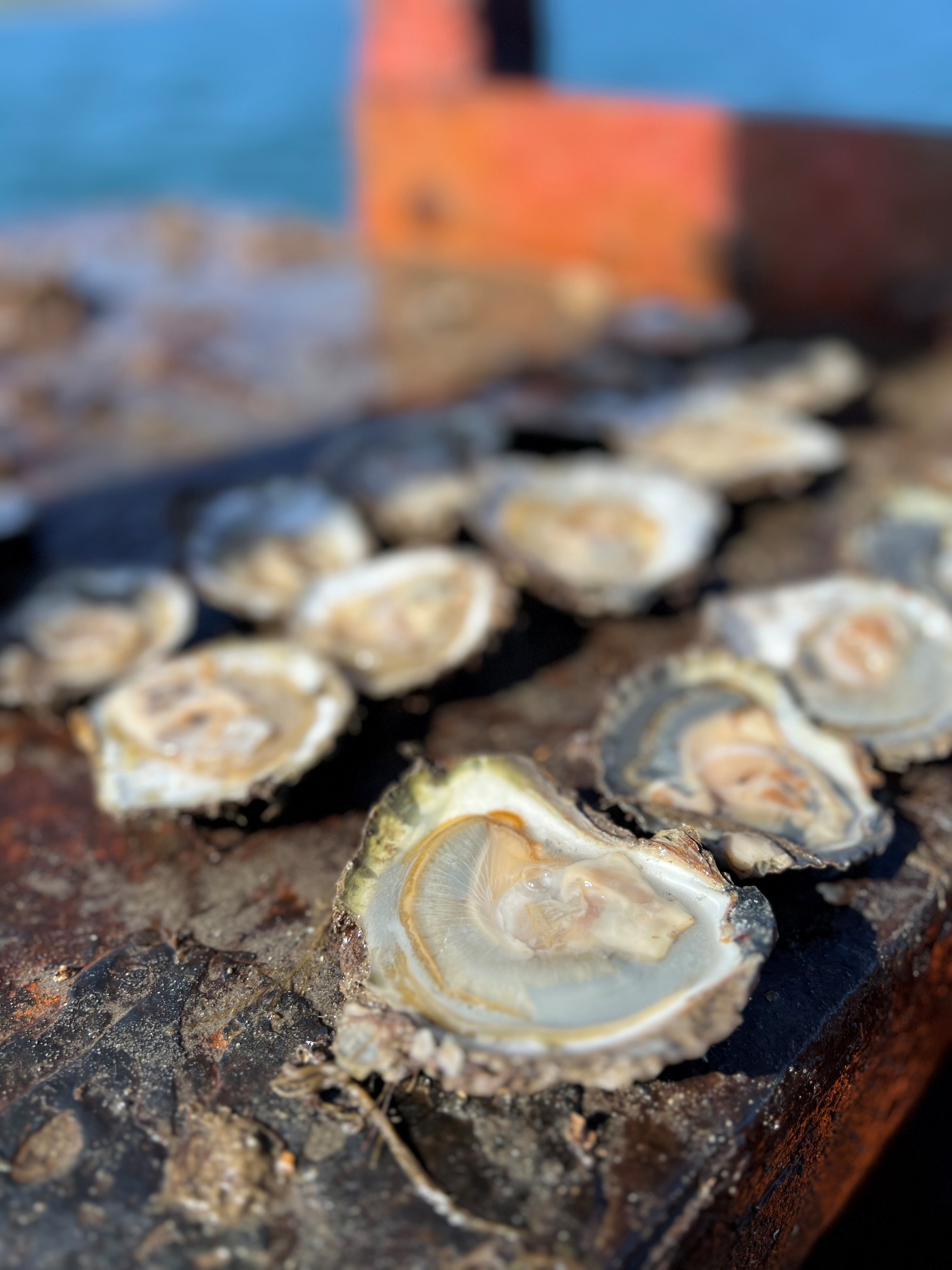
Loch Ryan is Scotland’s last remaining wild, native oyster fishery, with oysters from this important bed supporting oyster restoration projects around the UK, as well as supplying diners at top restaurants. The bed is managed on conservation principles, with careful monitoring of the population and around 95% of each ‘catch’ being carefully returned to the loch to encourage growth of the oyster bed.
In June when the fishery team were installing spat (baby oyster) collector plates, known as coupelles, they found that around 30% of the oysters they sampled were brooding larvae at the same time, their flesh turned a milky grey by the tiny larvae each one was carrying.
Loch Ryan's bed is home to an estimated 23 million native oysters, according to a stock assessment carried out by Professor Bill Sanderson of Heriot-Watt University for the Solway Coast and Marine Project. A third of that population is roughly seven million oysters, and each native oyster carries around a million larvae. Around 10 June, when they released those larvae into the loch, it’s estimated that around 6 trillion baby oysters entered the water within a few days of each other.
Tristan Hugh-Jones said: "A native oyster only carries its larvae for around three days before releasing them into the sea, so to find a third of the sample brooding at exactly the same moment leapt out at us. We have simply never seen this proportion of Loch Ryan oysters spawning simultaneously in such numbers before.
"While native oysters can spawn a second time in a season if conditions are right, the first spawning is the important one. When so many are breeding together, the larvae have far more opportunity to be fertilised and to settle, and that gives us real hope of a good spatfall."
Native oyster larvae swim freely for around ten days before settling on the seabed and fixing themselves to a hard surface, ideally shell or a limed surface such as the spat collectors. Whether this year's spawning becomes the next generation of Loch Ryan oysters depends on where, and whether, they settle. Loch Ryan’s natural geography is particularly well suited to native oysters, as the sea loch retains a large number of the larvae in the sheltered waters.
The fishery has placed eight spat collectors at locations around Loch Ryan to catch and monitor where the larvae are settling most successfully. The date was chosen simply because the team wanted the collectors in before the usual late June or early July spatfall. Tristan believes the marine heatwave reported around the UK earlier this year is the likely driver of the early spawning, alongside a longer-term shift in the rhythm of the loch.
Tristan Hugh-Jones said: "Once again the water temperatures are up, but what is also significant is that the winter no longer gets very cold in Loch Ryan. Native oysters effectively hibernate in winter and use the water temperature to judge when to spawn. In Scotland the water doesn't drop much below seven degrees these days, so I think the oyster is struggling to know when to start. Everyone across Europe is trying to work out exactly when native oysters spawn, and hatcheries find it notoriously difficult. This year, in Loch Ryan at least, the oysters gave us a very clear answer."
The remaining oysters not seen brooding are likely to include males, which do not incubate eggs, and oysters not quite ready to spawn. The first indication of how successful the spatfall has been will come in early September, when the collectors are checked, just as the festival marquees are going up on the waterfront.
The oysters at the centre of this story will be on the menu at Stranraer Oyster Festival from 11–13 September, when the eighth festival takes over the town's harbourside a short distance from the beds themselves. Over three days, visitors can eat Loch Ryan natives freshly shucked at the oyster bar, watch Scotland's best shuckers go head-to-head in the ShuckOff for a place at the World Championships, and hear directly from the people who look after the loch. The celebrity line-up in the Kitchen Marquee includes Sam Heughan, Tony Singh, Rosemary Shrager, Matt Tebbutt and Julie Lin, all cooking with the people, place and produce of Galloway.
Romano Petrucci, Chair of Stranraer Development Trust, the community organisation that runs the festival, said: "When we started the festival, most people had no idea what was under the water in Loch Ryan. Now the loch's oysters are recognised right across Europe as an ecological treasure, and it is stories like this one, billions of baby oysters released into the loch in a single week, that bring people to Stranraer to enjoy them, learn about them and support the work of looking after them. It is a real gift to have news like this on the doorstep as we open the gates. Every oyster enjoyed at the festival helps fund the care of that bed, and this year visitors will be eating oysters from a loch that has just had, we hope, one of its best breeding seasons in living memory."
Loch Ryan's native oysters have been protected by Royal Charter since 1701. The bed is managed sustainably with only the largest oysters are harvested, and 95% of each catch is returned to densely laid, well-marked areas of the loch to maximise breeding. Native oysters are available only in months with an 'R' in them, from 1 September to the end of April, with the beds left undisturbed through the summer breeding season.